

October is Domestic Violence Awareness Month, a time to talk openly about abuse and about the options survivors have.Abuse is not only physical. It can be financial. It can be controlling where you go and who you see. It can be threats, or being made to feel afraid to leave. At its core, abuse is about control, and it can become more frequent and more intense over time.
For survivors who are ready to take a step toward safety, a Temporary Protective Order (TPO) can be one option. A TPO is a civil order that can restrict an abuser’s ability to contact you and come near you. This roadmap walks through what a TPO is, the steps to get one in Georgia, and where to find help along the way.

What is a TPO?
A TPO is a civil (as opposed to criminal) order of protection. It generally restricts the ability of the person the TPO is filed against to contact and come near the person in need of protection.
When a TPO is in place, no contact is allowed:
- No phone calls and no texts
- No DMs
- No telling someone else to contact the protected person
- No one should be within a football field of the protected person
Intimate partner abuse is a pattern of physical, sexual, and/or emotional abuse used by one partner to establish and maintain control over the other. Abuse can take many shapes and forms, but it is about control, and it can become more frequent and intense over time.
Three types of protective orders
Georgia offers three types of protective orders. Each has its own requirements.
A certain type of relationship (married or divorced, a child together, live(d) together, or parent-child, including foster and step relationships); an act of family violence as defined by statute; and a likelihood the violence will occur again in the future. Strictly dating relationships are not included.
A dating relationship within the last 12 months, or a current pregnancy; an act of dating violence as defined by statute; and a likelihood the violence will occur again in the future.
A certain type of relationship; an act of stalking as defined by statute (it occurs more than once, puts someone in fear, and has no good reason for the contact); and a likelihood the stalking will occur again in the future.
The Roadmap: Three Stages
1. File for an ex parte TPO
Ex parte is a Latin phrase meaning “from one side” or “for one party”.This means you are asking the judge to hear from you without the person you are filing against being there. You will see a judge the same day you file.
2. Receive your ex parte TPO
Some counties will provide a paper copy or will be emailed later. It’s not in effect until it has been personally served, or given, to the person you filed against. Service must be done by a law enforcement officer or a private process server. Sheriffs, private process servers, or law enforcement can be used to serve.
3. Return for the 12-Month Hearing
You will be given a court date for a second hearing, held approximately two weeks after the ex parte hearing, to request that your TPO be extended for up to 12 months. Both you and the person you filed against can present evidence at this hearing.
Filing in Fulton County: What to Expect
What to bring
- A valid picture ID, if available
- A current address for the person you are filing against
How it works in person
- Start at the Fulton County Family Division One Stop Office and complete the Fulton County Superior Court Family Division form in the courthouse.
- If the relationship is intimate partner, elder abuse, or child abuse, the Family Division directs you to the Safe Families Office.
- Complete the Safe Families Office intake. Staff speak with you and complete the pleadings.
- Attend your ex parte hearing. Hearings are held at 10:30 am and 1:30 pm, Monday through Friday.
- Court staff e-file the pleadings, and the court gives you a hearing date for the 12-month evidentiary hearing.
- Safe Families Office staff get you a copy and take a service packet to the Fulton County Sheriff’s Office.
Timing
The process takes approximately four hours from beginning to end. Plan to be at the courthouse approximately two hours before your desired hearing time.
Fees
- There are no costs for filing a Petition for TPO.
- There are no fees to file in Fulton County and have it served in Fulton County by the Fulton County Sheriff.
- If service must occur in another county, fees may result from that county’s sheriff’s office.
- You may also pay a fee if you use a private process server.
Where to file
- If the person you are filing against is a Georgia resident: file in the Superior Court in the county where that person lives.
- If the person is not a Georgia resident: file in the Superior Court in the county where you live or where the abuse occurred. Personal jurisdiction requirements must still be met under OCGA § 9-10-91.3.
- If the person recently moved: if they moved away from the county of the family home but have not shown an intent to remain in the new location, or have vowed to return to the county of the marital residence, venue is proper in either county.
- If the person you are filing against does not live in Fulton County, you may not be able to file in Fulton County.
- You must be 18 years old to file, but any adult may file on behalf of any child. The pleadings are standard across most of the state.
What a protective order can do
Beyond the no-contact and stay-away rules, a family violence protective order can provide relief that includes:
- Proximity restrictions and communication prohibitions
- Eviction of the abuser from a shared residence, and possession of the home
- Requiring the abuser to maintain alternate housing
- Custody and visitation orders
- Child support and spousal support
- A personal property award
- Damage reimbursement
- Costs and attorney’s fees
- Drug, alcohol, or psychiatric counseling, and FVIP
- A federal firearm prohibition
- Entry in the Protective Order Registry
- Criminal enforcement, and full faith and credit
TPOs also give you enforcement through criminal and legal sanctions. They can give peace of mind about your children’s safety when they are away from you, and they provide a way to enforce child support and visitation if the person you filed against does not follow the rules.
How the Safe Families Office can help
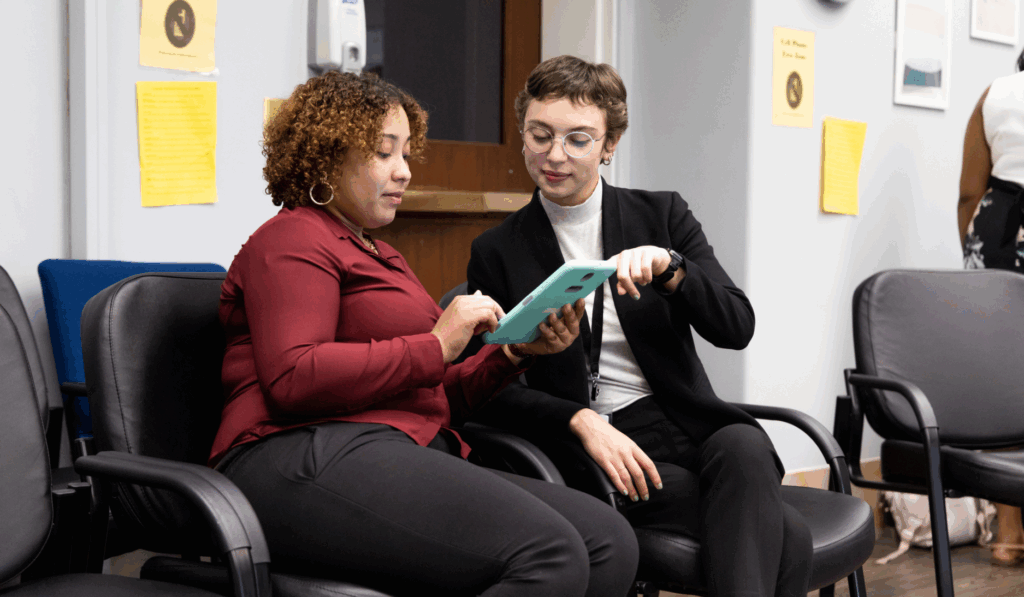
The Safe Families Office (SFO) is operated by the Atlanta Volunteer Lawyers Foundation (AVLF) and the Partnership Against Domestic Violence (PADV), and is a partner of the Fulton County Superior Court. Its team includes legal advocates, social workers, lawyers, and law and social work students. The SFO provides legal and social assistance for survivors of intimate partner violence, elder abuse, and child abuse, including:
- Assisting with TPO paperwork and educating clients on TPO procedures
- Accompanying clients through the TPO process
- Conducting trauma-informed interviews and risk assessments
- Identifying lethality indicators and barriers to safety
- Providing court advocate and/or legal representation for TPO-related court hearings
- Referring clients to victims’ assistance programs to learn about their rights as victims of crime
- Referring clients to community resources, such as emergency housing and shelter, support groups, and mental health services
Safe Families Office (404) 612-4324, Monday to Friday, 9:00 am to 3:00 pm www.safefamiliesoffice.org
Fulton County Family Division One Stop Office 136 Pryor Street SW, 8th Floor, Ste. C-826, Atlanta, GA 30303 (404) 612-0505, Monday to Friday, 8:30 am to 4:30 pm
24-Hour Crisis Line: (404) 873-1766
You do not have to do this alone.
The process can feel like a lot, and it is easier with someone beside you. You will see a judge the same day you file. In Fulton County there is no fee to file and have your TPO served by the Fulton County Sheriff. And the Safe Families Office is there to help you prepare your paperwork, understand each step, and go with you through the process.
This October, if you or someone you know is experiencing abuse, you can call the Safe Families Office. If you are not sure where to start, start with a call.